
This month I wrapped up 5 books and finished my first audiobook listen! Here’s the rundown.

Nexus: A Brief History of Information Networks from the Stone Age to AI
Harari is a master at telling compelling stories over the long arc of history. I mean, who’d have thought a chapter entitled “Documents” would be so fascinating? Harari positions information flow and control as a central thread of human history, from establishing the possibility of far flung kingdoms to democracy to dictatorships. He pushes back again the techno-optimistic view that more information accessibility should be an unfettered benefit, and it’s hard to argue against him as we’ve seen things play out in recent years. I admit, I was not prepared for the turn to Democracy & Dictatorships—especially as it read so presciently of things we’re experiencing now. Harari paints many possible futures for humanity with the rise of AI, and it should create some urgency for policymakers and the public to create some guardrails.
Superbloom by Nicholas Carr
This was a fascinating and poignant read, and an incredible pairing to read while listening to Nexus. Carr uses a desert Superbloom event that yielded an influencer overrun as a snapshot to illustrate how communication technologies can drive us apart. But he goes back further—and deeper—tackling how each communications breakthrough brought optimism, fear & challenges. He highlights how media change the very ways we communicate, not just technologically but linguistically & socially too. He also shows how slowly & poorly our regulatory bodies adapt to new modes of communication. Carr tells how every leap forward was heralded by some as the invention that would lead to utopia, yet the increased speed and reduced friction often has the opposite effects. (Fun fact: Margaret Mead proposed a network for communication that sounded an awful lot like the internet. The tech just hadn’t arrived yet.)
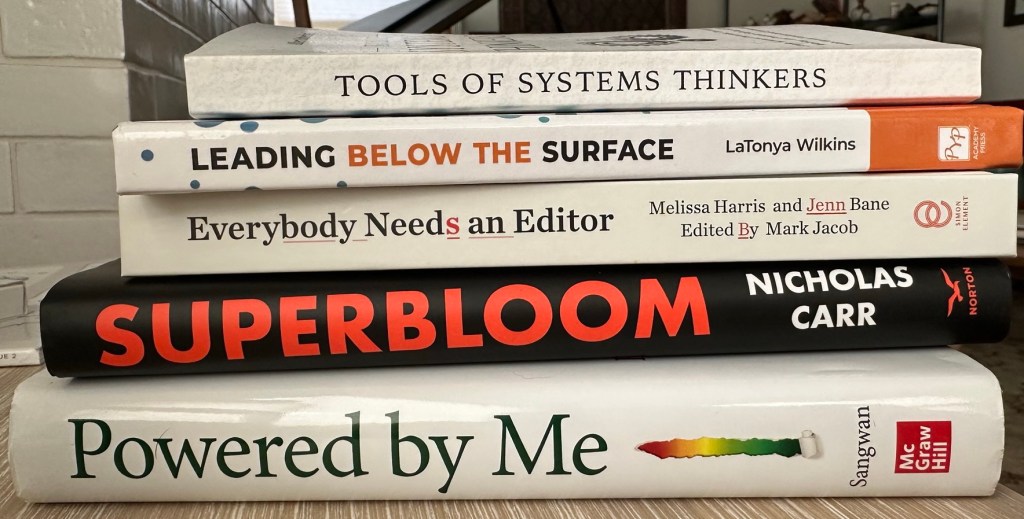
Tools of Systems Thinkers by Albert Rutherford
This one fell a bit flat for me. It offers some useful concepts/tools, but the format and writing didn’t quite land.
If you want an intro to systems thinking, go for Donella Meadows’ Thinking in Systems — one of my favorite books of all time, period.
Leading Below the Surface: How to Build Real (and Psychologically Safe) Relationships with People Who Are Different from You by LaTonya Wilkins
Wilkins positions authentic, supportive, deep relationships as the key to transformative leadership. And I don’t think she’s wrong. She sets up a framework for REAL leadership—relatable, equitable, aware, loyal. She also makes a case that this type of leadership is foundational to improving equity and belonging in the workplace.
Everybody Needs an Editor: The Essential Guide to Clear & Effective Writing by Melissa Harris and Jenn Bane
A quick guide to improving your writing and avoiding common pitfalls. Though it mostly focuses on professional communications, it also touches on the personal as well. It will be a nice little reference book for my team and me.
Powered by Me: From Burned Out to Fully Charged at Work and in Life by Neha Sangwan
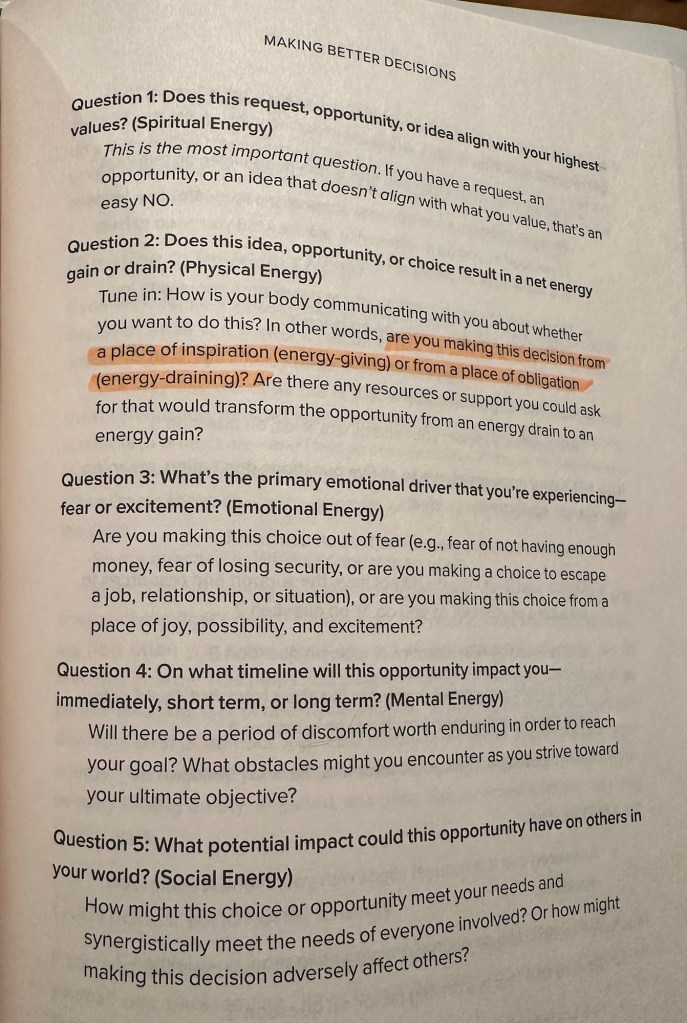
This is almost a how-to guide to being human, when you’ve eliminated so many boundaries that you are skidding towards exhaustion and burnout. It covers a lot of ground, from sleep and movement to core values and purpose. There are lots of assessments and worksheets to help along the way, and some powerful stories too. I was familiar with many of the key ideas, but often authors focus on one aspect, not the full spectrum of how we gain or drain energy. Sangwan trained as a physician and also brings in concepts from functional and Ayurvedic medicine. The latter admittedly sets off my skeptic senses, but I’m trying to keep an open mind.


 Ever on & on