What I’m doing for #digiwrimo 2014

November is a month for writing, at least judging by the virtual pledge campaigns. There’s National Novel Writing Month (NaNoWriMo), Academic Writing Month (AcWriMo), and Digital Writing Month (DigiWriMo).

Writing has long been one of my outlets. I hadn’t been writing for myself lately, and I missed it.

Writing is also part of my job, but it’s different. There’s this pressure of writing for an official thing. It adds gravitas, in my mind. It also adds overly complex structure and stilted language to my work. That’s not how my writing (even my work writing) is supposed to be.

What did I need to change?

Recently, I attended a training about storytelling and plain language. One of the speakers, Kathryn Sosbe, has been working in newsrooms and government agencies for decades. Within a minutes, she came around to the list of what it takes to become a better writer.

The first thing: Read. Widely. (I can hear my PhD advisor saying this, as he sat across the conference table from his new crop of students.)

The second thing: Write. Everyday.

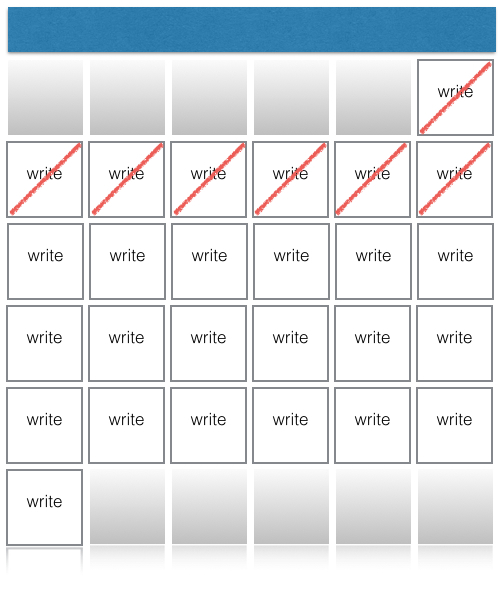
write-everyday.001

That struck a chord.

I checked in with Digi the Duck. Sure enough, DigiWriMo was set to start in a couple of days.

Maybe this confluence of events was a sign – a nudge to get my ass in gear just as a community was taking up the banner.

The DigiWriMo Launch Party was the next night. I committed, if only to myself, to participate in some way. It came time to fill in the “roster”, a Google doc where people posted the media they worked with and their goals for DigiWriMo.

What should my goal be?

I’m a glutton for unrealistic expectations of myself. I create endpoints and timelines that are often ludicrous. I plan with this impossible ideal of what I can accomplish if the rest of the world – and my own brain and body – just behave. Perfectly.

Lately I’m trying to be more aware of where I am. I’m trying to be more grounded in reality. That’s not to say that I don’t want to stretch beyond that, that I should or will never try to reach further. It’s just that, at this moment, what I need in some parts of my life is to set my mind to something and actually get it done.

It had been a while since I’d written, consistently, for myself. Sometimes writing is slow. If it’s about science, even more so. Sometimes I end up down rabbit hole. Sometimes the things I write are just too personal for public consumption.

Going in to DigiWriMo, I had no particular direction in mind. My ideas were scattered.

I came back to Sosbe’s comments about how to make writing seem easier.

Write everyday.

She talked about getting up at 4:30 every morning, preparing her coffee, and sitting down to write. Anything.

Something sounded strangely decadent about that (the “just writing” part, not the 4:30 am part).

Maybe it was time I finally took the advice I’ve heard again and again. Write everyday, and see where it takes me.

So here I am. A week later. I get up a half hour earlier, fix my coffee, and write for at least half an hour. (Weekends are more flexible.)

I have now written every day in November.

I’m finding that it’s a good way to start my day. It wakes up my brain. I get to kick off my day with some time for me, rather than stumbling groggily into whatever the day may bring.

Even after this short time, the roadblocks to writing feel less substantial. I have more momentum, including for my writing at work.

For my personal writing, this will be my third blog post during DigiWriMo. The posts aren’t well-crafted, carefully polished pieces. But that’s not really the point.

The point is that I’m reclaiming another space for myself. And I’m sharing part of the process with a community that has supported and encouraged me for the past five years. Maybe I’ll discover a grander scheme along the way. But for now, just exploring this space again is enough for me.

Posted in Uncategorized | 1 Comment

Redefining parameters & priorities

When I moved to a new city and new job, I had this vision of the things I would do with my newfound time and cash flow. It was rooted in the things I’d done outside work over the past few years – things I thought I wanted to continue or recommit to or expand.

Reality didn’t line up with expectations. I felt at a loss. I was frustrated. I felt lazy and unmotivated. I was disconsolate.

Gradually I began to realize that I had failed to grasp how disruptive this new experience could be.

How new environments would alter what I was getting in my usual routine.

How changes in the present could pull up things of the past.

How the newness of everything might amplify persistent self-doubt and a host of other things.

I had never considered that, in a new environment and set of circumstances, my wants and needs – or the forms they took – might change.

Taking stock

Recently I started talking with someone and taking a sort of inventory. We discussed priorities, the things I wanted to be spending my time. The list wasn’t meant to be exhaustive, detailed, or immutable. The intent was to start with four or five broad categories that were at the forefront of my mind.

My initial list (in no particular order) came down to:

  • Work and career
  • Relationship with my partner
  • Physical fitness
  • Social interactions
  • Home life

The first few are pretty self-explanatory. They came easily. They connected to long-held priorities.

I was a little surprised to find myself adding “social interactions” to the list, with face-to-face contact in mind. I’m an introvert. In the past, I hadn’t sought consistent connection outside work.

But things were different in Boston. When I moved there I was married, so there was human engagement outside work. I worked in labs where we shared workspaces and interests and break areas. Sometimes those interactions extended beyond the lab. I found connections with people through Twitter, as waited on data acquisition or wound down at home. Even after my spouse and I separated, much of my network was still in play. I had housemates. I found some additional community where I needed it.

Now I live alone. My project at work is pretty solitary, with much communication done via email. The layout of the workspace and the nature of work people do makes it harder to connect with people who aren’t working on the same project. I spend my day reading and writing and planning, so the snippets of time for checking in on Twitter are rarer (and the way I interact online has been shifting over time).

Home life is basically about making my space comfortable and livable. It covers a few things – planning and preparing meals, keeping things clean, getting my space organized, keeping a budget. Most of this isn’t new – and yet it is. I have a much larger space, my own space. There’s more to do. Locations and logistics changed. My capacity changed. Not long ago, I could walk into a grocery store without a list and emerge with what I needed for the week. Now I can find that overwhelming, so I have to prepare and/or be mindful of my mood.

What are you doing?

Next we took the list and discussed how I wanted them to rank. Which one did I want at the top of the list? What seemed to be dominating time now?

We started talking about my schedule, day-by-day.

After I get up, I get ready and head straight to work. I’m usually home by about 4:30. Work is pretty solidly covered.

So what do I do after work? And how do those things relate to my priorities?

One day a week I go to a running group. That addresses physical and social aspects.

I usually run at least two other days during the week – additional points for fitness.

Sometimes after work or running, I’ll cook dinner and clean up. A contribution to the home life.

Typically I attend a discussion group each week. Every week or two, I end up going out for a couple of hours with a friend after work. More social time.

My partner and I talk on the phone every night, and we see each other most weekends. So I’m investing time in that relationship.

Most of these things don’t go into a calendar. They’re just things I do.

Building on the present reality

Sketching out my schedule, I realized that I’m not just abandoning my evenings to nothingness, as I thought. I’m regularly doing something almost every day of the week. And the things I’m doing directly feed priorities I had identified.

It also let me see what pieces might need some more time and attention.

Some details work against others. I need my home to be a welcoming space, which has required some new acquisitions. I need structure and accountability for fitness beyond running, which I addressed with a gym membership. This pull directly against my desire to budget and pay down debt. There are choices and compromises.

And then there’s the part of me that always wants to do more. I’m beginning to feel that I have the time and energy to do more things. But I don’t have the time and energy to do all the things. I have to reflect. How do I choose?

I have to take a long view. No gimmicky quick-fix scheme is going to get me where I want to be. I have to put in the work. I have to adjust to my present reality, and I’ll have to keep doing that.

But as I adjust to the present reality, I get to begin building on it, rather than shells of the past or of fantasy.

Posted in Uncategorized | Leave a comment

Fantasy, reality, and learning to be

Four months.

Four months since I took the time to see a post through to the end and hit publish here.

I sigh, embarrassed that it’s been so long. A bit ashamed that I haven’t done more.

Resigned to accepting that fact – and the possibility that I had set expectations for myself too high. Hopeful that maybe, this time, the lessons will stick.

20140901_102914

Flying high

Eight months ago, I was making plans. I had accepted a new job in a new city, taking my career off in a new direction.

Somewhere in my head, I constructed this vision of what my “new” life would be. A fantasy, really. My new job would bring two things that had been in short supply as a postdoc: time and money. It was going to be amazing!

I would analyze data from my postdoc project, work on manuscripts, write posts for my blog and a couple of pieces for other outlets. I’d pitch in on other online projects and maybe some local ones.

Hell, maybe I’d pick up another hobby (scrapbooking the photos and tickets from the Japan-Korea trip would cool, wouldn’t it?).

Oh, and I would lay waste to my debt. I would cook most of my dinners at home and pack my lunch everyday. I would run and use the tiny gym in my apartment building to stay fit.

I’d be sensible and responsible. I’d do the things right, because nothing and no one would stop me. I would give myself a month or two to settle in, but then I would turn the fantasy into reality!

Oh… will I ever learn.

Coming back down to earth

In the midst of the excitement for changes to come, I had forgotten two very important things.

First, reality doesn’t care about my fantasies. It doesn’t care about anything. It just is. Reality is a state – a collection of circumstances, events, people, mental and emotional states. It’s the system in which I exist and move and live. My choices and actions influence this state, but much remains beyond my control.

Second, change (in the “major life event” sense) is hard. Even when it’s what we need. Even “positive” changes, the ones that move me toward the life I want. Change is tough. Stressful. Disruptive.

There have been immense changes in my life in the last couple of years. I got divorced. I found a new relationship. I moved – locally, but into entirely new circumstances (no longer married, living with strangers). In my career, I decided to do something entirely different from what I’d been doing for 10 years. I converted the decision to real change, moving to a new city and taking a new job. I’m living alone – essentially for the first time in my life.

And, of course, while all of this was going on in my life, the lives of the people around me weren’t static. My friends were settling down – getting married, buying houses, having babies. My dad started dating. Then co-habitating. Then eloped. My partner bought a house, and he’s flourishing at work (a position he’d just started as we began dating). My nieces, who I get to see once or twice a year, are growing up. My grandparents are growing older.

The things in my life and in the lives of those I care about contribute to my reality. They’re the circumstances and events.

Hitting turbulence

Change brings disruption, and some are tangible and predictable. Moving to a new city means packing things up, leaving the comfort of the known, finding the places and things you need. A new job means new people, new culture, new responsibilities.

But I wasn’t prepared for the emotional disruption. Some of the prior big changes in my life had come in the midst of, or created, significant turmoil. This time would be different, right? I thought, “I’m moving in a positive direction. Everything is going to be great!”

The first couple of months after the move were so disorienting that I don’t think I really noticed. And I cut myself some slack. I’d done some big things. It was understandable that I was maybe a little shaky, that I couldn’t just plunge right in to doing all the things.

And then the weeks continued to pass. Most of the things in my fantasy were not getting done. I didn’t have the mental or emotional energy to do them, it seemed. Much of my spare time in the evenings was spent just zoning out. I might mentally obsess over the things I “should” be doing or wanted to do, but I couldn’t clear the barrier to getting them done.

Abandoning the comfort and routine of life as usual disrupted my emotional equilibrium (such as it was). It intensified emotions and reactions. Things that had, for the most part, prowled quietly in my mind, now sometimes bound out from the dark.

Adjusting approaches

Things are good. I’m happy with my choices. But my life has changed. So have my needs and my capacities.

I still have those aspirations from my fantasy. But I’ve had to take a step back – to assess my new reality, to reevaluate my needs and desires, to adjust priorities.

I need more structure for my fitness.

I need more human interaction, face-to-face, outside work.

I need to find ways to tame – no, to coexist more serenely with those prowling creatures in my mind.

And I need to keep finding the patience and gentleness to continue taking care of me. To be realistic. To let myself be something other than perfect. In part, because it’s better for me, and in part, because it helps me better connect with the world.

Posted in Uncategorized | 2 Comments

Scales of progress

I’m feeling lately like I’m not doing “enough” with my time, as though I’m caught in a rut emotionally and mentally in my off hours. Work is great. I love the new job – the day-to-day tasks and the bigger project directions. But time at home less… fulfilling? Satisfying? Nourishing?

Maybe I’m unsure of the right word because I’m not totally sure what I’m looking for. Maybe I don’t know what I’m looking for because this is the first time, in a very long time, that I’ve had a significant amount of time, at home, consistently, that’s really all to me. This is the first time I’ve had an eight-hour/day job. I get in early, so I get home early. And this is the first time (aside from a few months last year) that I’ve lived alone. Ever.

The past 18-months have been eventful, to put it mildly. Separation and divorce. Two moves. A new romance. A new job. A new career direction. And that’s not even all of it. There have been nights and weekends, typically when I’m alone, that the stresses have weighed on me, broken my composure, bringing pieces of my past life to the fore. Often I find it frustrating, sometimes infuriating. “It’s been x year(s). When will I be done with this thing? I just want to move forward.”

Tonight, an idea struck. In fitness, I know that comparing today’s fitness level to yesterday’s is meaningless. Today I may feel better emotionally, psychologically, even physically if I exercised yesterday. But to see an objective change in performance, I know that I have to take a longer view – how do I compare to where I was last week? Last month? Last year?

Such are many aspects of life – especially recovery from or adjustment to those foundational shifts. Progress can’t really be measured day by day. It’s in the long view that I can see the difference. I’ve been pressuring myself to be in “top form” emotionally every day and to make tremendous leaps in “fitness” just… because. But, like when I exercise, there will be bursts of improvement, slow gains, and plateuas – and of course, declines can happen too. These can be tweaked by my approaches. But before I get too frustrated about a lack of progress, I need to take a step back and see just how far I’ve come.

If look back at where I was a year ago, I’ve come a very long way indeed.

Posted in Uncategorized | 8 Comments

Living in the Void: The postdoc “contract”

Prompted by a discussion on the Twitts…

You got the offer for the postdoc position you wanted. The letter outlines your salary and benefits, and it notes that you’ll have a one-year appointment with an option for renewal. You take it.

You show up and find out that there’s only salary support for six months. Unless something else comes through (and chances aren’t looking good), you’ll need to find another lab, after barely starting in this one.

Sadly this is not an unfamiliar scenario for a number of postdocs. Maybe it happens when they show up. Maybe it takes a few months for the realization to hit. Or maybe it comes just after being reappointed for another year. No doubt it’s a shitty situation. In many cases I’ve heard of, it’s not that the PI wants to boot the postdoc out of their lab. It’s just the plain, simple, bleak reality of finances. They were expecting (or hoping desperately) something would come through, but it didn’t. And now the postdoc has to scramble to find another lab or job.

An understandable reaction is, “How did this happen? What about my contract?”

The devil is in the details.

I can’t generalize (and I’m not sure these things really can be generalized). This is what I have seen in my limited experiences and have heard from some others. (In other words, take the following to apply to “some institutions”.) Postdocs often exist in this weird void between “student” and “employee”. Institutions have separate policies dealing with postdocs, which are sometimes laid out in a postdoc handbook (this is, in fact, one of the practices recommended by the National Postdoc Association). Even with that one-year appointment in hand, postdocs can be terminated at any time without cause. Supervisers may be expected or required to give you a notice of early termination, maybe somewhere between 30 and 90 days before the termination date. But they are well within instituional rules to kill your appointment before the year is up.

So if you’re considering, starting, or in the midst of a postdoc, find out what your institution’s policies are. Find the documents and read them for yourself. Don’t rely on the best guesses and reassurances of others (even PIs can get it wrong). See if your institution has a postdoc handbook; this will likely also have other important information dealing with benefits, vacation, and extended leave. Don’t know where to look? Check in with your institution’s postdoc association or office for postdoc affairs. Don’t have one? Offices for training and education or career development might be good places to check.

Bottom line: Know your institution’s policies. That “contract” might not be quite what it seems.

Posted in biomedical workforce, postdoc life | 5 Comments