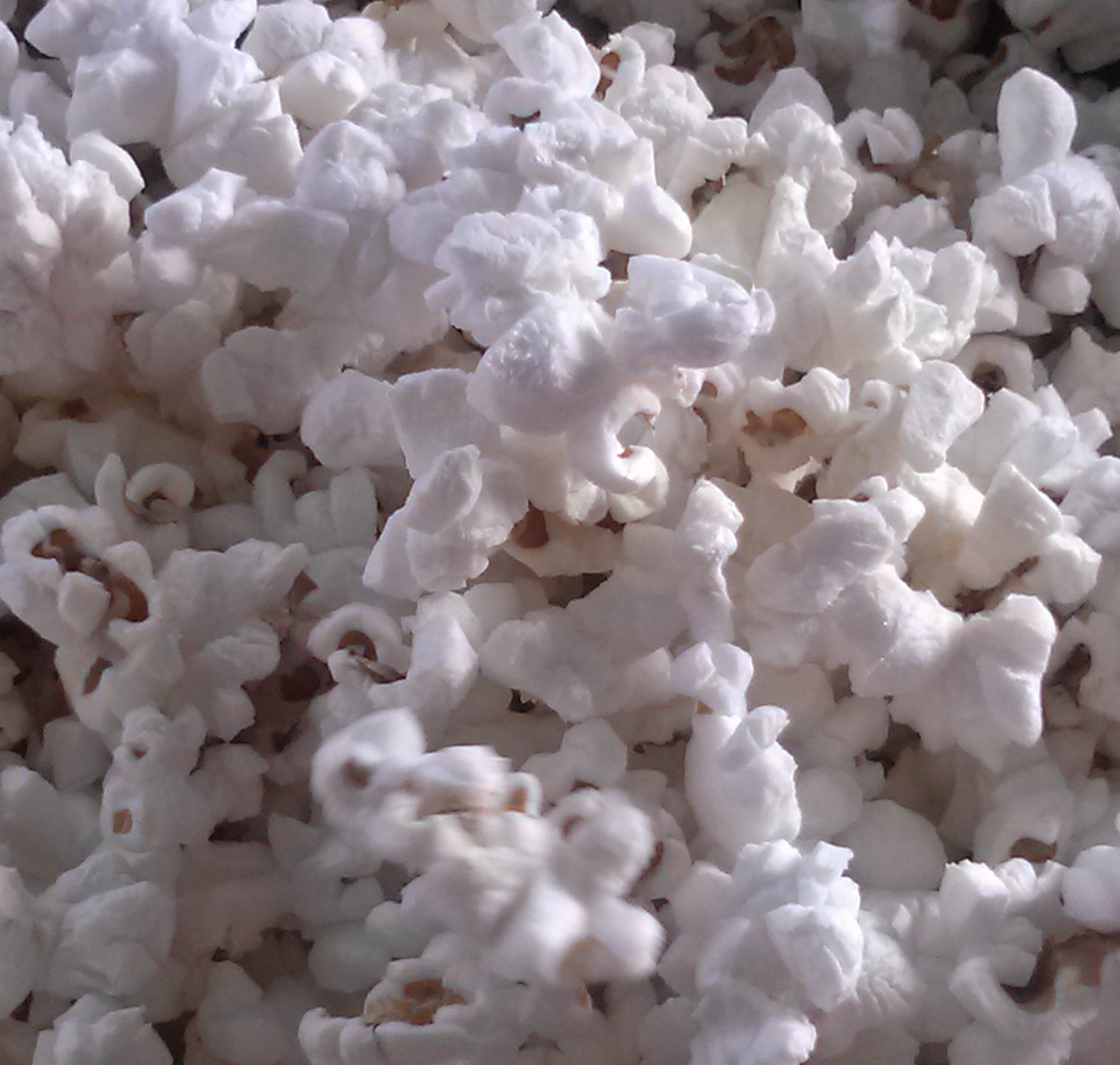
Course correction: What you never thought you’d need to know

It’s that time of year again. Students are flooding back onto campuses, resuming their courses of study or embarking on a new path.

Research runs similar lines – following up and taking new directions. And sometimes it leaves me wishing I had learned more _______ as a student. There’s hope for those who are still students – and in the digital age with things like free online courses and CodeAcademy, there might even be hope for the rest of us. Here are a few on my list:

  • Statistics – really, why isn’t this required for every science degree, from BS to PhD? We tend take p-values as a statement of truthiness of research results, but how well do most of us understand them?
  • More calculus – If you get into any sort of quantitative biology, derivatives and integrals are going to haunt you.
  • Linear algebra – Goes along with ‘more calculus’ and the realization that computers operate in matrices.
  • Computing – Along with previous 2, if you’re doing quantitative analysis, chances are you’re going to find yourself entrenched in R and/or MATLAB. You might also find that you’re running, editing, or writing code, so speaking the language (e.g. Python, which seems to be taking over bio applications) is be a huge benefit.

Ten years ago, as I was finishing up my BS, I never imagined how much some of these things would be infiltrating my life. From my view, these things certainly are not going to become less useful in the future – of my research or the field.

What’s on your list?

Posted in Uncategorized | 13 Comments

Morning musing: Decline of the doctorate?

Of late, I have noted, among a subset of scientists, a disposition that the quality of the PhD candidate and/or PhD training declined.

Of course, this is based on purely subjective measures – usually centered on the degree of independence and engagement.

I posit that there is, always has been, and always will be a distribution in these areas, and that perceptions of decline are either: (a) just that, perceptions colored by general negative feelings about the academic system today, or (b) a result of the increased volume of PhD candidates and recipients (i.e. the raw numbers have increased, but the distribution remains the same).

But maybe I’m just an optimist …

What say you?

Posted in attitudes, biomedical workforce | 4 Comments

Churning (fake) butter: More safety questions for food manufacturers

In case you missed it, check out this post for context.

August seems to be turning into a month of popcorn toxicology. While doing a bit of house blogkeeping this morning, I ran across a release about a new study on a diacetyl substitute.

After manufacturers started reducing and removing diacetyl from their fake butter recipes, they switched to a series of closely related compounds, simple extensions of the carbon chain. National Institute of Environmental Health & Safety and National Institute of Occupational Safety & Health have now assessed the toxicity of one substitute, 2,3-pentanedione, in rodents. Given the structural similarity to diacetyl, both groups thought the respiratory effects of 2,3-pentanedione should be explored. The NIOSH study, published online today, also looks at neurological effects because a related compound, 2,4-pentanedione is neurotoxic.

I won’t go into the detail that I did for the diacetyl Alzheimer’s post, because I am not a pathologist, and pathology is the meat of these papers. But here’s the gist: Inhaling 2,3-pentanedione injures the respiratory epithelium of rats and mice. Based on the NIOSH results, acute respiratory toxicity is comparable for diacetyl and 2,3-pentanedione.

However, 2,3-pentanedione creates some other major problems in rats. It damages to olfactory neurons, inducing degeneration and apoptosis. The compound also increases mRNA expression* of inflammatory genes – in the brain. Presumably it’s crossing the blood-brain barrier and dispersing throughout the brain; the authors observed changes in mRNA expression in the olfactory bulb, hippocampus, striatum, and cerebellum.

* The changes for the inflammatory genes IL6 and NOS2 are significant… but I suspect Alejandro would yell at them for using only one reference gene for their RT-qPCR

As is typical for early stage toxicology studies, concentrations of 2,3-pentanedione used were moderate to high – 200+ ppm (or 200 mg/L air) administered continuously –  but both neural and respiratory effects were observed within 6 hours of continuous exposure. Although rats are not humans, these studies highlight the importance of establishing exposure limits and proper engineering and personal protection controls for industry workers.

What does this mean for the consumer? Like diacetyl, the FDA lists 2,3-pentanedione as GRAS, “general recognized as safe” under normal consumption conditions. If 2,3-pentanedione levels in food are comparable to diacetyl, then a single bag of microwave popcorn emits less than 1 mg, with about 80%  immediately upon opening.

I, for one, would continue to enjoy my popcorn. But it might be wise to adapt example of a former U.S. president: Pop but don’t inhale.

References

Daniel L. Morgan, Micheal P. Jokinen, Herman C. Price, William W. Gwinn, Scott M. Palmer, & Gordon P. Flake (2012): Bronchial and bronchiolar fibrosis in rats exposed to 2,3-pentanedione vapors: implications for bronchiolitis obliterans in humans. Toxicological Pathology. DOI: 10.1177/0192623311431946

Ann F. Hubbs, Amy M. Cumpston, W. Travis Goldsmith, Lori A. Battelli, et al. (2012): Respiratory and Olfactory Cytotoxicity of Inhaled 2,3-Pentanedione in Sprague-Dawley Rats. The American Journal of Pathology. DOI: 10.1016/j.ajpath.2012.05.021

Jacky A. Rosati, Kenneth A. Krebs & Xiaoyu Liu (2007): Emissions from Cooking Microwave Popcorn, Critical Reviews in Food Science and Nutrition. DOI: 10.1080/10408390701638951

Posted in Uncategorized | 2 Comments

Science, reporting, & communication

Last night, I posted about a basic research paper that has gotten some press attention. As is often the case, much of the nuance and context of the original work is missing from the press coverage or buried at the end of the stories.

I am a self-proclaimed protein science junkie, and my career has centered on proteins in  immunity. However, while doing my PhD in Chemistry, I also learned a bit about toxicology. My uni had a good program in the field, and part of my PhD supervisor’s lab worked on molecular and cellular toxicology – which is really biochemistry and cell biology with a dash of pharmacology. I picked up enough to be skeptical of claims as broad as “Popcorn linked to Alzheimer’s”.

Another element added to my skepticism. My PhD mentor, well-versed in toxicology, was a popcorn fanatic. So our lab got the rundown when manufacturers announced they would be changing their microwave popcorn formulas due to safety concerns regarding diacetyl. (Note this announcement came very shortly after the first account of a consumer  experiencing adverse effects under rather rare circumstances.) So my mind jumped to diacetyl when I first heard about the current story from Jason Goldman on Twitter:

https://twitter.com/jgold85/status/233325825997561856

I clicked the link and found this example of how to do make a hash of science reporting:

MINNEAPOLIS, Minnesota (KTLA) — Next time you’re at the movies, you may want to think twice before asking for extra butter on your popcorn.Scientists at the University of Minnesota have found that an ingredient in fake butter, known as diacetyl, may triggerAlzheimer’s disease.In addition to microwave and movie popcorn, diacetyl is also used in margarine, snack foods, candy, baked goods, pet foods and other products such as beer and chardonnay wine.

The study also found a link between the flavorant and lung damage in popcorn factory workers.

What exactly did KTLA do wrong?

  • Not only was there no link or citation for the paper, the piece didn’t even list the journal where the work is published or the lab that did the work. I suppose we should be grateful that they mentioned the institution, which allowed me to find the paper via Google Scholar.
  • Only 1 sentence out of 4 actually addressed the current study. And that one sentence was a substantial generalization and overstatement of the work done.
  • The last sentence is false – the findings stated are correct but the result of medical research from other groups more than 5 years ago.
  • There is no qualification of dose – that (as was noted in the paper’s abstract) this is proposed as a potential hazard for industry workers who are chronically exposed to very high levels of diacetyl (as compared to the typical consumer).

The original press release is pretty reasonable. And other news outlets did a better job of covering the story, for example, this CBS health story. My major qualms with most media coverage are the overly broad headline (I realize creating statements that are both concise and accurate isn’t easy) and every lede I saw started with consumer focus when the research is about industry exposure.

Don’t get me wrong. Understanding the effects of industry exposure levels of chemicals is necessary and important. Such studies inform corporate and regulatory policy. But, as seen here, the media* can (and often does) misconstrue study findings, sometimes giving the impression of data that simply isn’t there. This adds to the challenge scientists face of communicating research to the public and to policy makers. It seems at times we are expected to deal in absolutes, but in science, there are subtleties and unknowns.

It reminds me of an admonishment Captain Kirk laid before Spock one time: “Insufficient data is not sufficient, Mr. Spock! You’re the science officer. You’re supposed to have sufficient data all the time.” In reality, scientists don’t have sufficient data all the time. Data are sometimes incosistent, sometimes nonexistent. We keep pushing forward – combing the literature, designing the next experiment, looking for that next bit of data, adjusting our models – to come up with the most complete and logical answer within our power and ability. Usually it leaves us wanting more – and in some ways, part of the beauty of science is that it’s never really done.

* Clarification: Here I am referring mainly to mainstream media health and science coverage, not science journalism. It’s been noted in many conversations that bad science coverage is often the result of a journalist covering topics all over the map who has maybe 15 or 20 minutes to digest a press release and write something up. There is a lot of good science journalism out there. The case study here is simply an example of why scientists should pay attention to how the media is reporting research.

Related post: Check out Doctor Zen’s thoughts on food & trust at Neurodojo.

Posted in communication, public outreach, science literacy | Leave a comment

Popping up trouble with butter and Alzheimer’s

Ooooh, popcorn!! Wait… What were talking about again?

Love popcorn? Been having trouble with your memory lately? Perhaps you saw the story popping on news and health websites about the link between popcorn flavoring and Alzheimer’s disease and panicked. What have I been doing to my brain all these years? But before you toss out that box of Orville Redenbacher, you might want to take a look at the actual science behind the story.

The posts across the web are based on research appearing in Chemical Research in Toxicology, a journal published by the American Chemical Society that focuses on molecular and cellular mechanisms of toxic agents. The Vince lab at University of Minnesota looked at a compound in butter flavoring called diacetyl and its effects on amyloid-β 42, a protein marker of Alzheimer’s disease. But there are a few missing pieces to reach the lede about popcorn’s link to Alzheimer’s.

The system and the data

A hallmark of Alzheimer’s is the accumulation of plaques and oligomers – that is, insoluble and soluble protein clumps  – containing amyloid β peptides (Aβ), fragments of the β-amyloid precursor protein. In the brains of healthy and diseased individuals, many different forms of Aβ are produced, each with different properties and toxicities. Some are innocuous, whereas others are prone to form oligomers and fibrils like those seen in neurodegenerative disease. Aβ42, the peptide used in this study, falls in the latter category.

The toxicity of Aβ42 depends on its structure, and both properties differ between methods and batches of peptide preparation. The Vince lab used a method that yields soluble, toxic aggregates, even in the absence of diacetyl. They demonstrated that diacetyl modifies  Aβ42 and alters and accelerates toxic aggregation of Aβ42. To understand whether this changes cellular toxicity of Aβ42, the authors used the SH-SY5Y cell line. Diacetyl alone had little effect on cell viability at low concentrations, but it did enhance the toxicity of Aβ42. Under their conditions, about 25% of the cells died when treated with Aβ42 alone, which increased to 45% when combined with diacetyl. This indicates that accelerated aggregation correlates with increased cellular toxicity. The authors also found that diacetyl weakly but irreversibly inhibits purified glyoxalase I, a protein that detoxifies a class of compounds that promote amyloidogenesis.

One of those factors is that for something to be toxic in vivo, it has to reach its target. Alzheimer’s is a disease of the brain, so to influence the disease, diacetyl would have to cross the blood-brain barrier. The Vince lab used another in vitro model, MDCK cells expressing the drug transport protein MDR1 . The cells are grown on a support, a compound is added only to one side of the chamber, and then at different time points, the amount of compound on each side is determined. This model is pretty good at distinguishing compounds that reach the central nervous system (like caffeine) and those that don’t (like the diuretic furosemide). Diacetyl crosses this cell layer, though it does not require the presence of MDR1. This suggests that diacetyl can reach the brain.

Lost in translation

Diacetyl can probably cross the blood brain barrier, and it enhances toxicity of a protein associated with neurodegeneration. Ergo, popcorn butter causes Alzheimer’s, right? Not quite.

The first and foremost caveat is that all the Vince lab experiments were carried out in vitro – no human epidemiology, no animal data. They looked at how diacetyl affected a purified model peptide in a test tube or with cells in a dish. We can learn a great deal about potential mechanisms of action of biological and chemical agents from in vitro, but predicting how those mechanisms apply to the response of a whole organism is rarely straight forward. In fact, the authors note this in the paper’s discussion:

Due caution must, however, be exercised while extrapolating the results of this study to phenomenon in the intact animal. Although the in vitro data in this study show toxicity of DA at concentrations actually recorded physiologically, extension of this toxicity in the in vivo environment is influenced by a plethora of factors…

A major challenge for the entire amyloid field is that purified, synthetic Aβ peptides are not as toxic as oligomers isolated from tissues. Par for the course, the concentrations of Aβ42 used for this study (low to mid micromolar) were between 1,000 and 25,000 times higher than those in vivo (low to sub-nanomolar). Some suggest that concentration of Aβ  in cell vesicles accounts for differences, that although the concentration in spinal fluid is low, the effective concentration in cells is much higher. Alternatively, owing to either Aβ heterogeneity or other factors of the tissue milieu, the actual structures of “toxic” oligomers in the brain may differ from those of isolated peptides such Aβ42. From my viewpoint, these discrepancies make it difficult to judge whether in vitro differences in Aβ aggregation will hold true in vivo.

Another critical consideration is that dose makes a difference, a principle that is often lost in reporting toxicity studies. The authors of this paper noted that they used concentrations of diacetyl that can be physiologically attained – among workers in food manufacturing factories, specifically those in popcorn factories though diacetyl is used in production of other foods. These individuals are working around vats of diacetyl and are chronically exposed. In the abstract, the authors state (emphasis mine):

In light of the chronic exposure of industry workers to DA, this study raises the troubling possibility of long-term neurological toxicity mediated by DA.

It’s unclear how doses for glyoxalase I The concentrations of diacetyl needed to affect Aβ42 toxicity could hypothetically be seen in industry workers, based on exposure levels reported in some cases. But would this exposure level be reflected in the brain? We know very little about how diacetyl is metabolized and removed by the human body. This study suggests that diacetyl can cross the blood brain barrier, but those experiments were conducted using levels of diacetyl much higher than typical industry exposure. Diacetyl poses a known respiratory health risk for industry workers, but this study is only the first step in characterizing other potential risks. However, these risks concern individuals chronically exposed to industrial quantities of the compound.

The missing ingredient?
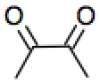
I’m Diacetyl. And I’m in your butter. Yes, the real butter.

At some point, you might have wondered, “What the hell is diacetyl it doing in my popcorn?!” Over many decades, scientists have identified the naturally occurring chemicals that give our favorite foods their distinct smells and tastes. Food manufacturers use this knowledge to add desired flavors (or remove wanted ones) to products. Diacetyl, produced by microorganisms used make butter, cheeses, and wine, is one of the elements that provides the products their buttery aroma. So it seemed natural to use diacetyl to replicate the butter flavor in things like popcorn.

But a few years ago, two major manufacturers, ConAgra and PopWeaver, removed diacetyl from their microwave popcorn. Diacetyl continues to be used in other food products, but the exposure levels of consumers are orders of magnitude below those of industry workers. So, if you find yourself more forgetful after that next bag of popcorn, there’s a better chance it’s a nocebo effect than the butter.

Featured reference

More, S. S., Vartak, A. P., and Vince, R. The Butter Flavorant, Diacetyl, Exacerbates β-Amyloid CytotoxicityChem. Res. Toxicol. (2012, in press) DOI: 10.1021/tx3001016

Other selected references

Benilova, I., Karran, E., and De Strooper, B. The toxic Aβ oligomer and Alzheimer’s disease: an emperor in need of clothesNat. Rev. Neurosci. (2011) DOI: 10.1038/nn.3028

Wang, Q., Rager, J. D., Weinstein, K., Kardos, P. S., Dobson, G. L., Li, J., and Hidalgo, I. J. Evaluation of the MDR-MDCK cell line as a permeability screen for the blood–brain barrierInt. J. Pharm. (2005) DOI: 10.1016/j.ijpharm.2004.10.007

This piece is cross-posted to BlogHer Health.

Mallia, S., Escher, F., and Schlichtherle-Cerny, H. Aroma-active compounds of butter: a reviewEur. Food Res. Tech. (2008) DOI: 10.1007/s00217-006-0555-y

Chemical Information Review Document for Artificial Butter Flavoring and Constituents Diacetyl [CAS No. 431-03-8] and Acetoin [CAS No. 513-86-0] (Supporting Nomination for Toxicological Evaluation by the National Toxicology Program)

Posted in science behind the story | Tagged , , | 9 Comments